
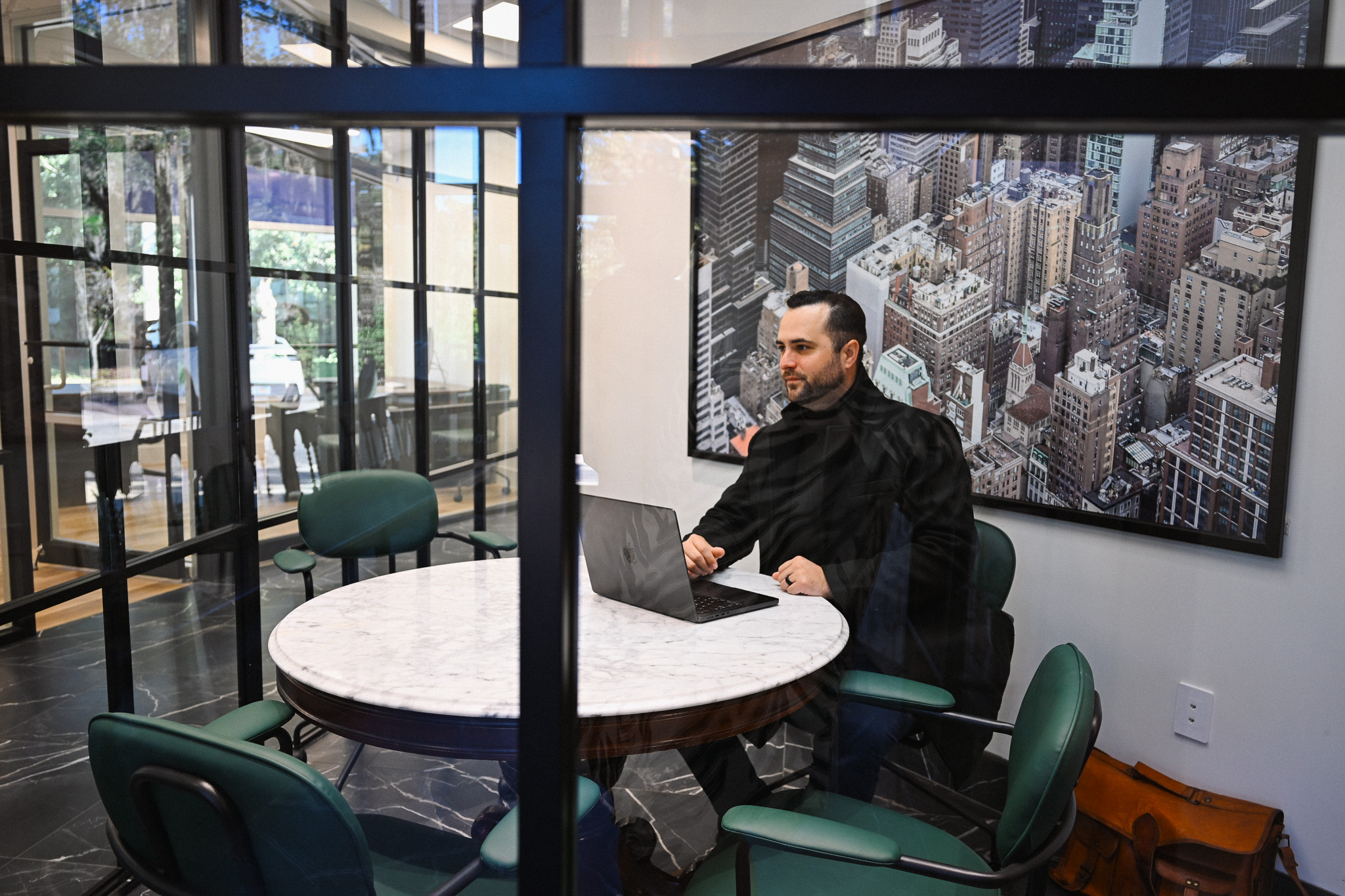
Quick Introduction: Career, reps, and learnings from 2010–2024
Before diving into how I started a marketing agency in 2024, I want to introduce myself—especially if you’re new to my work.
I’m Blake Wisz. I live in Palm Coast, Florida with my wife Jasmine and our two young kids. I grew up in West Michigan, in a small town outside Grand Rapids.
My journey into business started shortly after high school. I earned a degree in Business Marketing from Cornerstone University in 2014, but before graduating I had already launched my own LLC and photography business. I took on local gigs—events, businesses, weddings—anything that helped me learn. At one point, I sold my motorcycle just to invest in better camera gear. That decision opened doors I couldn’t see yet.
That’s where I got hooked.
After that, I moved through several marketing roles, starting as an intern and working my way up in the faith-based nonprofit space. I worked with organizations like Our Daily Bread Ministries, My Utmost for His Highest, and the Tim Tebow Foundation. That chapter brought our family to Northeast Florida in 2019.
Those years taught me leadership, team dynamics, and how to build effective campaigns on tight budgets. As our family grew, I knew I wanted exposure to new industries.
That led me to Wired2Perform, a SaaS behavioral science and analytics platform focused on helping teams perform better through data. I loved the work—helping leaders build stronger teams with better insight. Like most startups, it was fast-paced and demanding.
At the same time, I helped launch the marketing and branding for The Link in Nocatee, Florida, working directly with founder Raghu Misra. Being involved in decisions for a 24,000 sq. ft. space alongside a founder taught me a lot about speed, risk, and growth.
That season made one thing clear: I was ready for bigger challenges.
I joined Littledata next, a DTC-focused attribution and analytics company. I started in Growth Marketing and eventually became Head of Marketing. I led a strong team and helped refresh a long-standing brand while telling better customer stories for brands like Chomps, Johnnie-O, Grind, and Flux Footwear.
In 2024, the company restructured and downsized heavily. My team went from five people to one. Same work, fewer resources. I genuinely thought I’d be there long-term—it aligned with how I like to work—but business is business. That moment pushed me toward what I should’ve been doing all along.
Throughout every role, I kept freelancing—photography, video, marketing campaigns, travel shoots, and content creation for DTC brands. I also invested heavily in relationships.
Work has always been a big part of how I express myself. If there’s one takeaway here, it’s that careers—and businesses—are built through reps.
Two years into building Chasing Creative
One of our biggest early wins was onboarding Flxpoint as a recurring client. We partnered closely with their CEO to tell customer stories—something I had learned to do well over the years. That mix of storytelling and fast execution became foundational to Chasing Creative.
From there, we brought on SaaS, DTC, and B2B clients—both retainers and projects.
As of January 4, 2026, we’re still building—but with clarity.
What started as a few fractional roles has grown into a proper agency. We contract expert talent to build websites, run campaigns, produce video, and execute marketing that actually moves the needle.
Chasing Creative helps bold brands grow fast—with sharp creative, smart strategy, and no wasted moves.
Most of our growth has come from steady, compounding MRR. Many clients work with us long-term for marketing support, content, video, and paid performance. At the center of it all, I take a consulting-first approach—aligning goals, budgets, and timelines before jumping into execution.
In year two, we tightened operations—project management, workflows, and feedback loops. We run lean, with no fluff, guided by five core values:
- Ownership mindset – We treat every project like it’s ours.
- Creative with purpose – Originality that drives outcomes.
- Assume best intent, then solve – Trust first, solutions always.
- Confident collaboration – Strong opinions, mutual respect.
- Shared wins, shared growth – Success is a team effort.
So far, I’ve been the primary operator. That creates deep client relationships—but also limits scale. The next phase is bringing in the right people who want to build intentionally. The right fit thrives. The wrong fit exits quickly.
AI and modern SaaS tools have been major leverage points. With focus and repeatable workflows, one person can now do the work of several.
Lessons I’d pass on
Cash flow matters more than ideas.
You can have great ideas and real demand—but if cash flow isn’t stable, everything feels harder than it needs to be. The hardest part of going full-time is timing. Income has to exceed expenses, including what you actually need to live. Clients pay late. Billing departments move slow. That’s normal.
Plan conservatively. Expect delays. Hire a bookkeeper as soon as you can and use tools like ChatGPT to pressure-test scenarios. It’s helped me reduce stress and make clearer decisions:
Reduce distractions—intentionally.
Not everyone will understand why you’re so focused or willing to make short-term sacrifices for long-term goals. Some people compare. Some project. Some try to pull you back to what’s comfortable.
Surround yourself with people who are building—or who’ve already been there. You have to protect your attention.
Work on your business, not just in it.
“I’m too busy with clients” is something I hear all the time. I get it—but it’s non-negotiable. If you don’t invest time into your brand, positioning, and systems, you’ll always feel reactive.
I set aside time each week to look at the business—ideas, offers, campaigns, workflows. I use Monday to track them and assign future time. It’s the difference between stuck and intentional.
Celebrate wins—and losses.
I’ve only been laid off once. It stung. I still opened champagne that day. That mindset stuck.
Jasmine and I celebrate wins and losses alike. Every attempt is a rep. This past year I pitched two multi six-figure projects. Both passed—“you were close.” I celebrated anyway. The feedback made me better, and another one landed not long after.
Water the garden you already have.
I meet a lot of business owners obsessed with growth. I am too—but our fastest growth has come from taking care of the clients and relationships already in front of us.
We do client gifting. We grab dinners. We invest in teams—even people who aren’t decision-makers. Most of our growth has come from referrals and expanded relationships, not chasing the next shiny thing.
Final thought
Most relationships today are transactional. I’ve found transparency—with good intent—creates something better.
When you listen first, explain clearly, and show up consistently, trust builds. And trust is the foundation of everything worth scaling.
I write about brand, media, and the creator business on LinkedIn most weeks.
Follow on LinkedIn"Photos are gorgeous and he knows how to capture people's expressions in a unique way... I consider him one of my best photographers in my arsenal."
Join the Conversation Today!
Subscribe for insights, share your thoughts, and connect with a community of passionate readers.

Connect with Blake Today
Ready to elevate your brand? Reach out and let's create something extraordinary together.
.avif)
FAQs
Here are some common questions related to our blog posts.
A blog is a platform for sharing ideas, insights, and information. It allows individuals or businesses to connect with their audience. Regular updates can help build a community and establish authority.
Begin by choosing a niche that interests you. Set up a blogging platform and create quality content. Consistency and engagement with your audience are key to success.
SEO, or Search Engine Optimization, helps improve your blog's visibility online. It drives organic traffic by optimizing content for search engines. This can lead to increased readership and engagement.
Promote your posts through social media channels and email newsletters. Collaborating with other bloggers can also expand your reach. Engaging with your audience through comments and discussions fosters community.
Content marketing involves creating valuable content to attract and retain an audience. It focuses on providing useful information rather than directly selling products. This builds trust and loyalty among readers.
You can monetize blogs through affiliate marketing, sponsored posts, and advertisements. Offering premium content or services can also generate income. Building a loyal audience is essential for successful monetization.
Backlinks are links from other websites to your blog. They are crucial for SEO as they signal credibility and authority. High-quality backlinks can significantly boost your search engine ranking.
Creating engaging content is essential for keeping readers interested. Use visuals and storytelling to enhance your posts. Regularly updating your blog can also improve retention.
Use analytics tools like Google Analytics to track your blog's performance. These tools provide insights into visitor behavior and traffic sources. Analyzing this data helps refine your content strategy.
Guest posting involves writing articles for other blogs to reach a wider audience. It helps build backlinks and establish authority in your niche. This strategy can drive traffic back to your own blog.
Still have questions?
Feel free to reach out!