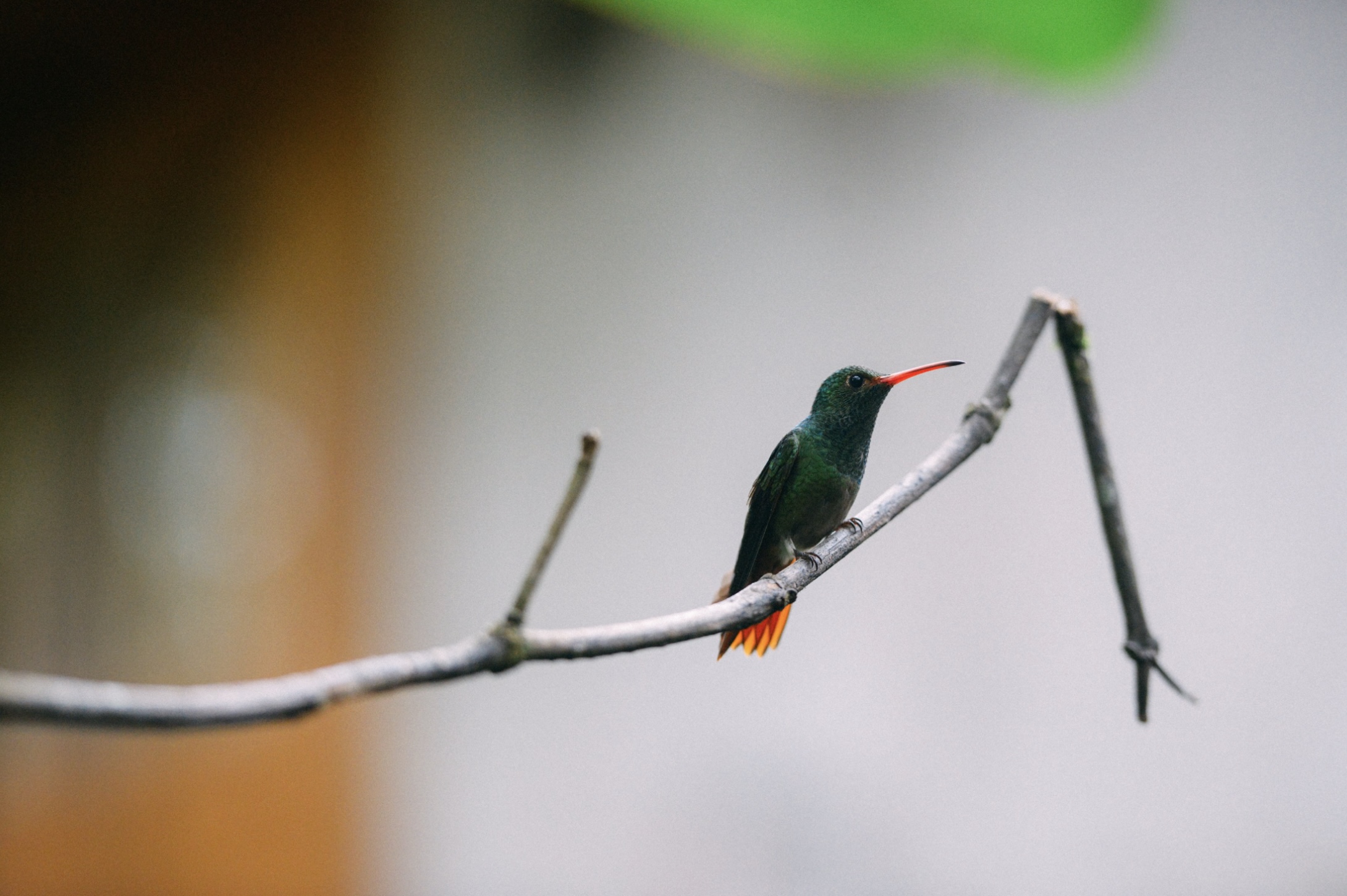
A hummingbird at rest, an orphanage in Ecuador, and a bottle of champagne that opened a door. Post three of our Founder series on building Chasing Creative.
Back in 2014, I traveled with my father-in-law down to Quito, Ecuador to volunteer at For His Children (Hogar Para Sus Niños), a home for at-risk and abandoned children that has been serving Ecuadorian families for years and operates across a couple of different campuses.
The climate, the region, the nature, the animals, and the people we came across were incredible. It felt like entering another world, one where things slowed down in the countryside and sped up in the city. As we backpacked through it, that rhythm was a great pace to be a part of.
We were there to photograph the children.
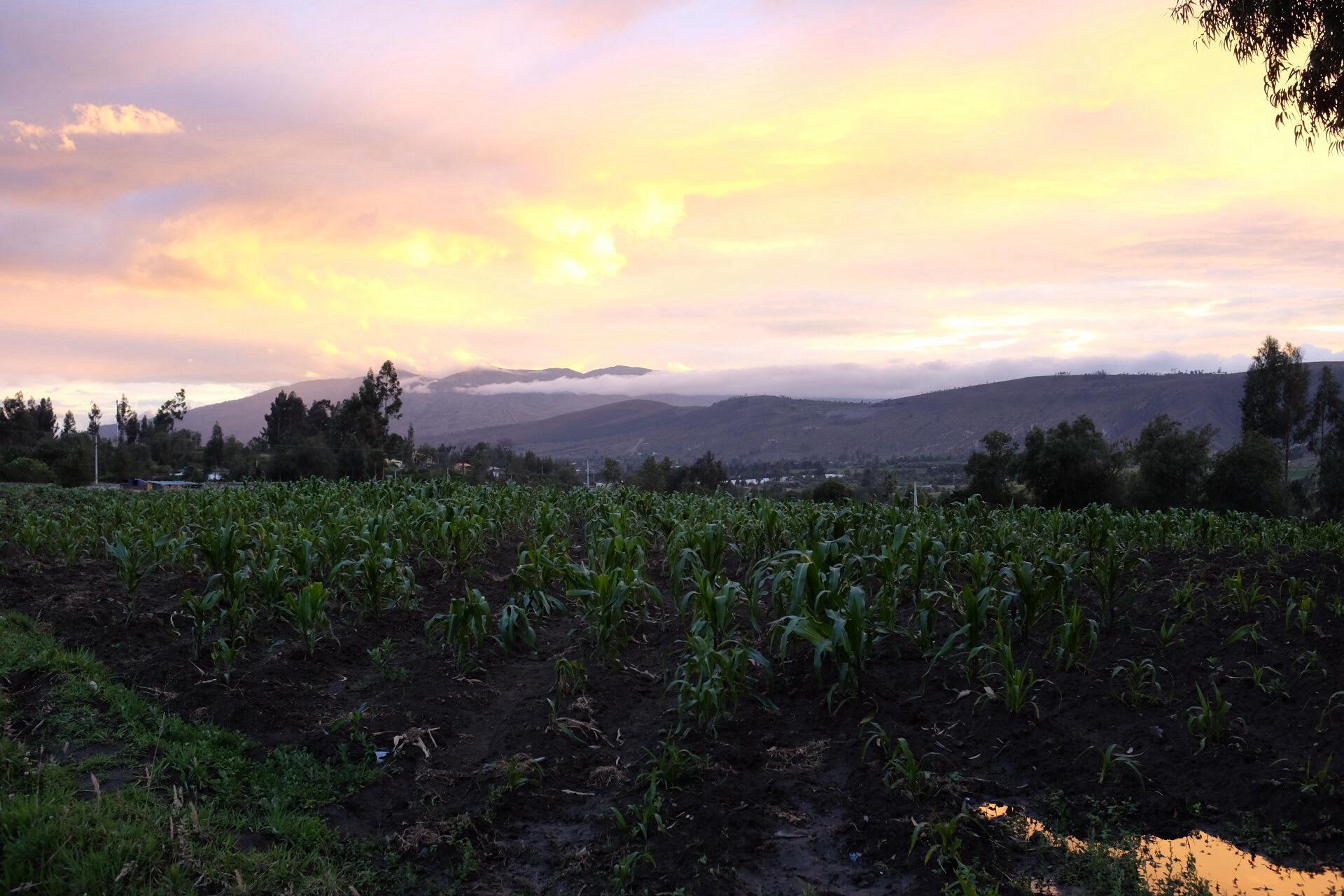
For privacy reasons we can't always publicly share those images, but you get the point. Photos are often what help prospective parents connect with a child, resonate with a personality on the other side of the world, and see a real kid instead of a case file. The orphanage also needs them internally, for their own scope of work and for telling the story of these awesome children.
So why am I telling you all this?
The hummingbird
Because on that same trip, I was also trying to photograph a hummingbird.
If you've ever tried, you know. Hummingbirds move fast. Depending on the species, their wings beat anywhere from about a dozen to more than eighty times per second, and they don't flap so much as rotate the outer part of the wing in a figure eight. Their hearts run somewhere between 500 and over 1,000 beats per minute. They can fly forward, backward, and briefly upside down. Their feet are built for perching, not walking, so when they leave a branch they don't push off the way other birds do. They just start beating their wings and they're gone.
If you're not a skilled bird photographer who has captured them before, it is genuinely difficult.
And that is exactly what this Founder series is about. Doing something over and over and over again is what makes you proficient, and eventually what some people would call an expert. You learn more about the topic. You get better at your craft. You're able to articulate and explain it to other people easily.
But it's also about practice and timing. Timing is what I want to focus on today.
I got this hummingbird at rest. I could have gotten it in flight. I could have caught it taking a quick sip of nectar from a flower. There are tons of different angles to capturing a photo, or to capturing a lead, and you want to do it in a way that feels natural. You want the best possible photo, the best resolution, the best imagery.
What I love about this particular shot is that it's a hummingbird doing something we see ordinary birds do. Sitting still. And we know it isn't sitting there for very long.
Timing in business
Reaching out to new prospects takes the right timing and the right pace.
You can lean on automation to help you move faster, but the thing that actually matters is context. Who are you reaching out to? What's happening locally? How is your brand applicable to them, right now and later?
We all get the cold emails we don't relate to. But the ones we do relate to, the ones built on real location knowledge and not some arbitrary merge field, on actual investment in a local community, on a common event we both attend, or on a person we've genuinely worked with professionally instead of just connected with on LinkedIn, those can go a really long way.
I've learned this a lot over the last year. I've learned it so much that roughly twenty to thirty percent of my business has come from these cold outreach mechanisms.
And it takes a lot of work.
Founders, leaders, COOs, and CMOs are all very busy. They have a thousand agencies that do relatively the same things in a different way, with a different structure, from a different geolocation. There are a lot of us out there.
Building an agency is building a service based company. You can compete with other service based companies, but you have to get your foot in the door. And getting your foot in the door isn't a sale. It's a moment where you get someone's time, and you have to articulate how paying you for your time later will give them more of their own time back and potentially more revenue.
That's one of the biggest gains there is.
So timing matters. When you time it right, or when you invest the time into reaching out to people properly, you get a great client and a great photo, and it becomes something repeatable if you learn the recipe:
- Prospect someone local and relevant that you can actually service.
- Create a connection through whatever communication method feels most organic to that person, or several of them.
- Wait for the follow-up.
- Reach back out.
- Now do something a little bolder.
The bolder move
Last year, one of my favorite clients we have today started with an email asking if there was anything we could help with.
A few months later, they asked for a pricing sheet. I sent it over. But then I did some deeper research.
I went to Champagne Coup and had a custom bottle made with our logo on it. That is not an inexpensive gesture. Call it a $250 investment, at least. I personalized the case with their name and sent it over with a note thanking them for taking our pricing sheet.
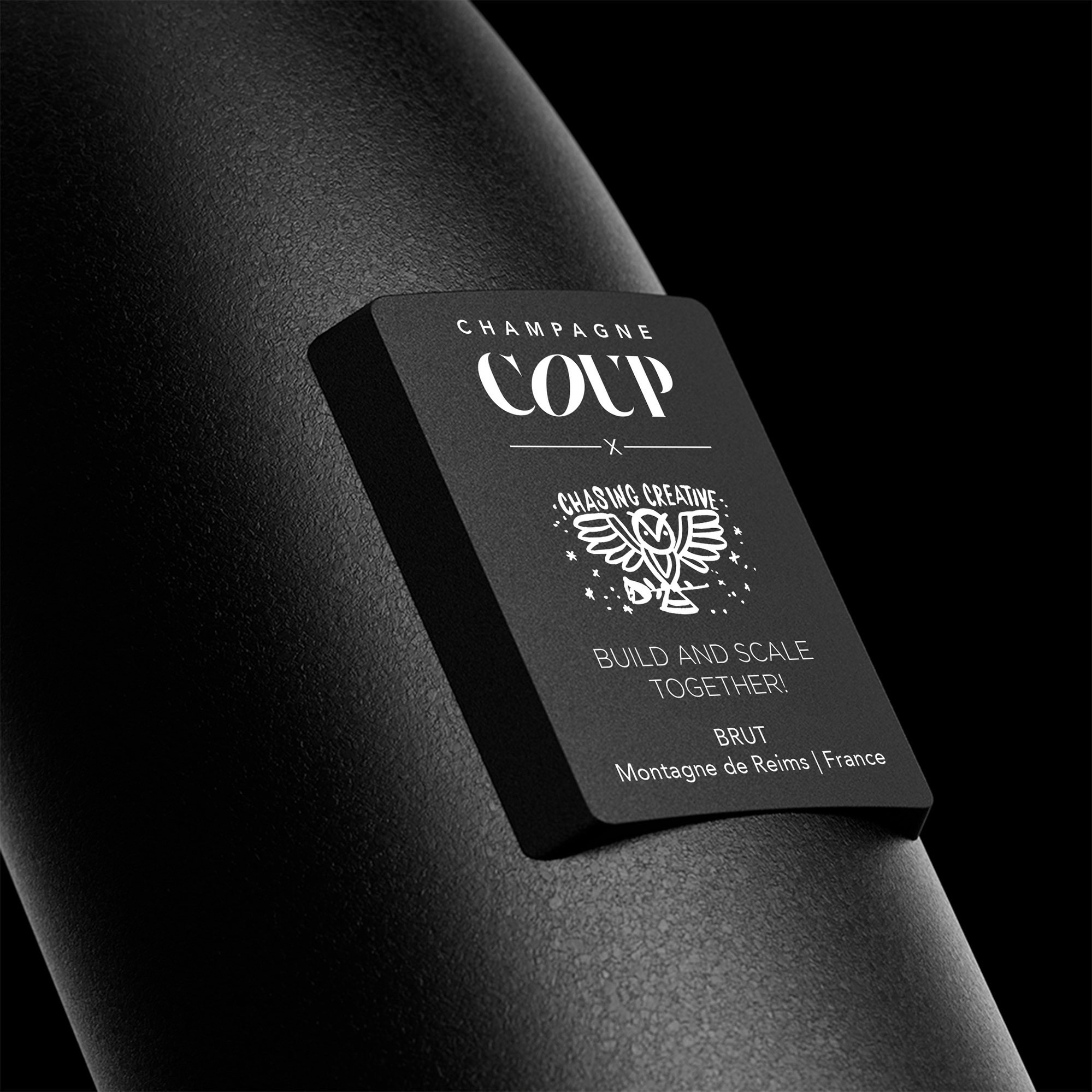
What I wanted that client to know from day one was that we're invested. We understand their history, which sits in luxury. And we're willing to be a partner in the business, not a vendor.
The timing was right. They emailed back saying they'd love to move forward on two items, which also told us there were other items down the road we could support. There was room to grow the partnership.
Since then we've doubled MRR with them, we continue to work together, and they have several other businesses.
I'm not sharing that to brag. Not by any means. I've learned the hard way that agencies can grow like wildfire, with big spikes in projects, and that timing can also be bad for other clients who then have to downgrade, or churn, which takes a real hit to a growing agency like ours.
Most things in life come down to timing
Getting the perfect shot takes practice, skill, and patience. Most of all, it comes down to timing. Most things in life do.
The other day I had a great conversation with a friend who is starting his business. He's devoted to growing it by whatever means possible, whether that's investing more money or more time, whatever gets him in front of more people. He wants the brand to be known, and he genuinely believes it will help the customer.
To me, that last part is the most important part.
I could see exactly where he was starting from, because not too long ago I was in the same position. It was a sober reminder that timing really is everything.
When I started my agency, if I hadn't had one or two clients go on retainer with us, I probably would have had to scrap the idea, at least for a while, and take a full time role. Which I would have enjoyed too, honestly. I love working with teams and scaling in a corporate environment. That's where my whole career has been.
But my biggest dream, the one I sometimes forget I'm already living, was to build a marketing agency where I get to work with cool people, cool technology, and travel.
The timing was right.
It won't always be right. I'll have to pivot and change things. Every founder knows that's the crucial part. If you get set in your ways, you might still grab an amazing photo, but could it have been better? Was there another spot to shoot from? Another angle? A different lens, filter, or polarizer?
Okay. Enough illustrations and metaphors. You get the picture. No pun intended.
One more thing
We don't live in a picture perfect world, and timing isn't always on our side. But if you try again and take another shot, well, luckily we don't have to use film anymore. You can take a lot of shots, and eventually one turns up that you love.
And keep in mind: art is subjective, business is objective. Do something you're passionate about. Something you like. Something you enjoy. Because if you enjoy it, that's contagious, and it spreads to everyone around you: your clients, your friends, your family, and more.
Thanks for tuning in. I hope this was helpful.
If you want to learn more about what Chasing Creative does, my agency, just let me know. In the meantime, thanks for following along here at blakewisz.com, where I write about the Founder series, photography, brand building, and the personal side of all of it.
I appreciate the connections, I appreciate everyone being a part of it, and I look forward to bringing you more in this series soon.
Stay tuned for post four.
I write about brand, media, and the creator business on LinkedIn most weeks.
Follow on LinkedIn"Photos are gorgeous and he knows how to capture people's expressions in a unique way... I consider him one of my best photographers in my arsenal."

Join the Conversation Today!
Subscribe for insights, share your thoughts, and connect with a community of passionate readers.

Connect with Blake Today
Ready to elevate your brand? Reach out and let's create something extraordinary together.
.avif)
FAQs
Here are some common questions related to our blog posts.
A blog is a platform for sharing ideas, insights, and information. It allows individuals or businesses to connect with their audience. Regular updates can help build a community and establish authority.
Begin by choosing a niche that interests you. Set up a blogging platform and create quality content. Consistency and engagement with your audience are key to success.
SEO, or Search Engine Optimization, helps improve your blog's visibility online. It drives organic traffic by optimizing content for search engines. This can lead to increased readership and engagement.
Promote your posts through social media channels and email newsletters. Collaborating with other bloggers can also expand your reach. Engaging with your audience through comments and discussions fosters community.
Content marketing involves creating valuable content to attract and retain an audience. It focuses on providing useful information rather than directly selling products. This builds trust and loyalty among readers.
You can monetize blogs through affiliate marketing, sponsored posts, and advertisements. Offering premium content or services can also generate income. Building a loyal audience is essential for successful monetization.
Backlinks are links from other websites to your blog. They are crucial for SEO as they signal credibility and authority. High-quality backlinks can significantly boost your search engine ranking.
Creating engaging content is essential for keeping readers interested. Use visuals and storytelling to enhance your posts. Regularly updating your blog can also improve retention.
Use analytics tools like Google Analytics to track your blog's performance. These tools provide insights into visitor behavior and traffic sources. Analyzing this data helps refine your content strategy.
Guest posting involves writing articles for other blogs to reach a wider audience. It helps build backlinks and establish authority in your niche. This strategy can drive traffic back to your own blog.
Still have questions?
Feel free to reach out!