
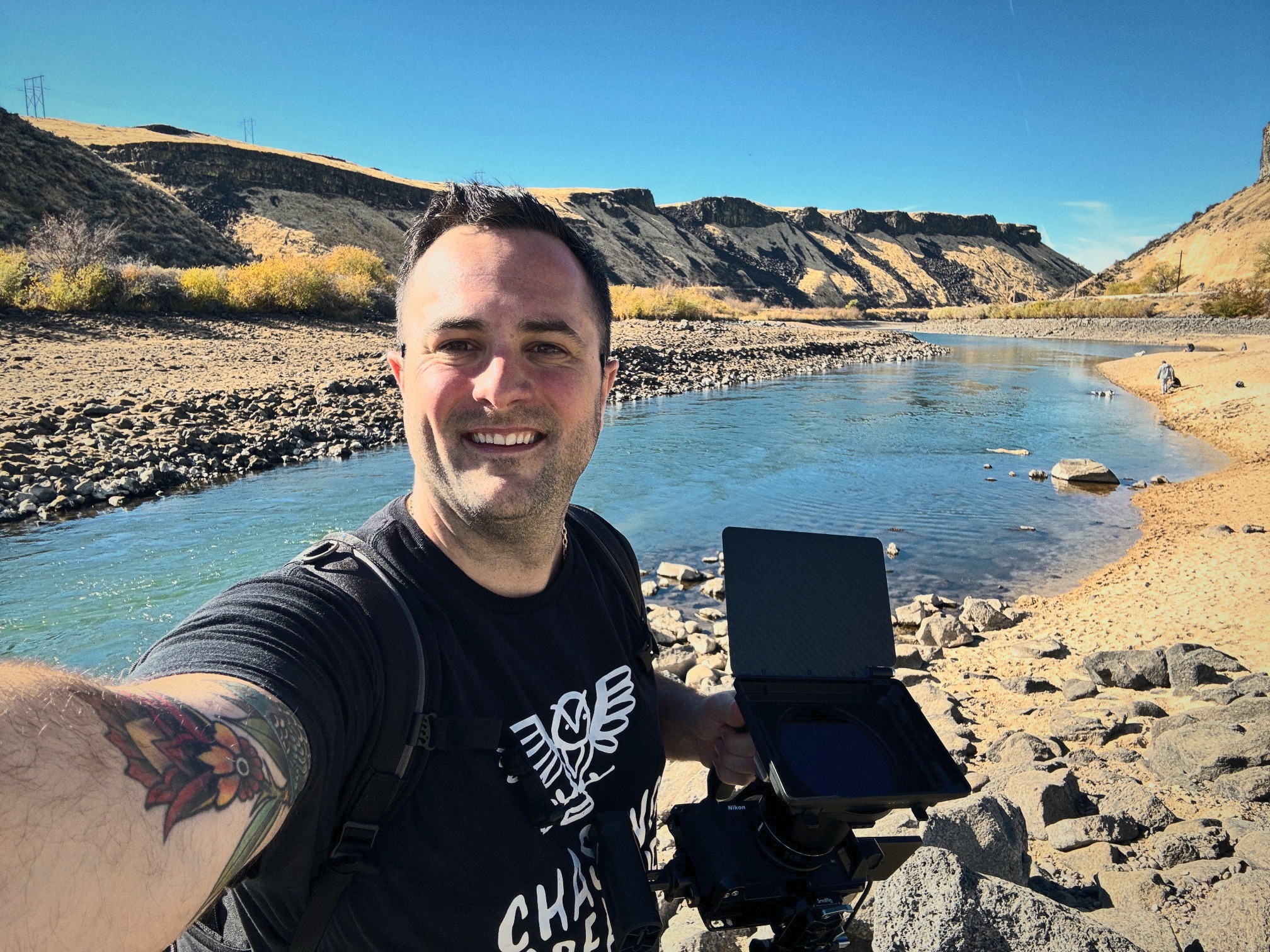
An 18-year-old who wants to get into marketing called me with questions. Here's what I told him. Part of our Founder series on building Chasing Creative.
I recently got on a call with an 18-year-old who wants to get into marketing. Branding, websites, ads, content. All of it.
He showed up with real questions. Better ones than I get from a lot of adults. He also asked permission to record, which I respected.
When we wrapped, I asked him to send me the recording so I could turn it into this post. One conversation, two uses. You'll see that idea come up a few times.
Here's what he asked and what I told him.
First, a little background
I didn't start out running an agency. I started in nonprofits. First at Our Daily Bread Ministries, where I began as an intern and worked up to global marketing manager. Then at the Tim Tebow Foundation, doing fundraising and content distribution.
Then I went to work for an entrepreneur who had already exited a software company. His new platform used behavioral science to help companies understand people's strengths and hire the right way. Working for him was one of the best decisions I've made.
Next I became head of marketing at Littledata, a UK based Shopify app doing serious revenue with a very small team. That's where I learned direct to consumer marketing. Subscriptions, ROAS, lifetime value.
When they stopped raising money, the whole marketing team was let go. Me included.
So I started Chasing Creative. It began as consulting. I'd review a company's website, and if we rebuilt it, we'd move them to a monthly retainer and ask bigger questions. Do you need video? Photo? Blogs? Social? Do you know what your messaging actually is? Do you know who your ideal customer is?
Most companies try to reach everybody. My job is to narrow the focus.
Then I did the same thing to my own business. We went all in on infrastructure: data centers, critical systems, intelligent lighting. I walked away from being a full service agency for everyone. That's a bet, and you don't know if it'll pay off. It's starting to.
How do you sell something that complex?
He'd read the line on my site about making the complex easy to buy and wanted to know how that works.
Most companies in this space run on account-based marketing. Nobody sees an ad and signs off on a massive equipment order. What you're really building is trust.
When you're deep in a technical business every day, it's hard to see your product the way an outsider does. That's true for all of us. I come in from the outside, get genuinely excited, and learn the product with the team. Then I ask how we turn it into a campaign.
The goal is to take everything they know and boil it down to one simple message someone outside the industry gets right away. I record my client meetings and feed them into an AI brain for each client, so when I'm working I know exactly how they talk about their business.
Here's what most people miss. Marketing is mostly a capacity problem. Founders usually know how they want to talk about their brand. They don't have the time. A good marketer brings the time, then asks the honest question: is this resonating with the audience? If not, try a different direction.
Every product is different, too. Some sell themselves. With data centers, the big providers show up either way, so the work is about trust and reputation, not a quick return on ad spend.
What skills make someone successful in your role?
I can only speak for myself, but here's what's worked.
Be resourceful. Solve people's problems, even when it has nothing to do with the job in front of you. Sometimes the most valuable thing I do for a client is an introduction.
Build a reputation. This takes the longest. The first couple years of a service business are a cold start, and the only thing that makes it compound is people vouching for you. In my industry, one executive will call another and ask, "Is this guy easy to work with? Does he do good work?" That call matters more than any ad.
One favor proved this to me. Early on, I built a client a website for cheap. That one relationship has turned into deal after deal, and it's still one of the biggest drivers of my business.
Push back. On the Enneagram I'm a Challenger. I push back, not to create conflict, but to get a better result. The best leaders I work with want that. An honest outside voice is worth a lot.
Go all in. When you work for a company, you're betting on its success. If you're not going to commit, don't take the work.
It also helps to have done the jobs yourself. I started as an intern, worked up to head of marketing, then started my own company. I've done nearly every role along the way. So when someone says a task takes 30 hours, I know when it really takes two.
So it builds on itself?
Exactly. That's referral marketing, and it works for any business. If a friend you trust says his dog loves a certain food, you'll try it. If you've never heard of a brand, you'll probably grab the one you've seen advertised.
My favorite example: I shot a video for a client at a data center. That data center is now one of my biggest clients. I never pitched them. I showed up and did good work on someone else's project.
So I always ask how many touch points I can create while I'm already working. That's selling while you work. It can feel genuine or it can feel salesy, and timing and phrasing make the difference. Most people want to help you, especially when you're building something from the ground up. People like to see the little guy win.
So it's really about time?
Time and capacity. If a company hires someone like me full time, that's a salary, benefits, and someone to manage me. Or they can say, "We just need Blake for these five things."
I don't pitch myself as a fractional CMO. I've tried it, and I don't think you can truly be fractional. You're in or you're out. I run my own business and bolt onto my clients' teams. We stay our own unit, but we become their first call.
Most people who meet me assume Chasing Creative is a big agency. I came from corporate, so I can represent us that way. Then they learn it's me leading a boutique team, built for each project from vetted professionals in our collective. They get it right away. They aren't paying for a big staff on salary who don't touch their project every day. And we're not the bottom of the barrel either. We sit between doing it yourself and hiring a Deloitte or a McKinsey.
Like many of our clients, one of them could build an in-house marketing team any time. He chooses to stay lean instead. It keeps things moving fast and protects his budget, so he keeps us on retainer and sends projects our way.
AI is what makes this model work. We're an AI-first company. If I'd started a few years earlier, I'd probably need a full staff by now. I don't.
Which AI tools make the biggest difference?
Try them all. I like Claude the most, and ChatGPT is great too. I spend real money on AI every month and use it for nearly everything, business and personal. I even used it to plan my wardrobe around my complexion and how I want to come across.
If you don't have a paid Claude or ChatGPT account, get one and use it every day. The more you use it, the more it learns about you. Some people hate that, and it's a fair data concern.
It won't replace experts like a financial advisor or a dietitian. But you can show up prepared: here's what I already think, help me fine tune it. You get a better result and pay for less of their time.
Here's what it looks like in my day. I'm editing a video and a client emails. I can't stop to read it, so I ask Claude what's in it. They want a change in the edit, so it goes straight into the project notes and I keep working.
Then there's margin. Say a client hires us for a big edit. If AI helps me do it myself instead of hiring it out, I keep that margin. Even with a hefty AI bill, the math still works. I aim for margins on every project and retainer that people tell me are impossible, which makes me want to hit them even more. Without healthy margins, you might as well take a salary somewhere and have an easier life.
That's not an excuse to never ask for help. I still have a handful of editors on speed dial.
Running your own business also means setting boundaries. Clients will call and text all day. I've noticed younger people are better at this than my generation. I recently hired a 25-year-old for a project who handled communication better than most people twice his age.
Where do you draw the line between AI and you?
AI is my thinking partner. The client relationship is mine.
There are people overseas who are better at AI tools than I am and work for a fraction of the cost. A lot of them deliver great work. What sets you apart is how you communicate with the client. That's still a human job.
My rule: when going back and forth with AI takes longer than doing the thing, I do the thing. Make the edit. Send the email. Better yet, pick up the phone and call the client.
I also go fully analog. I have a whiteboard in my office. I shut off every screen and map out the business. Here's my gap to my monthly recurring revenue goal. Here are the five projects coming up. If you write it down, you remember it. If you rely on reminders, you're checking your phone all day and turning into a robot.
What I love about my work right now is the balance. I've spent most of my career behind a desk. Now I also get out in the field, hold a real camera, and look people in the eye.
Know your limits, too. I'm launching a faith-based app, and I don't have time to build it myself, so I hired someone. When you lean on other people, vet them well. Gaps in trust turn into gaps in your business.
Will AI replace marketers?
That's a lot of people's worry. I don't think it will, at least not soon. Someone still has to prompt it. I have agents that run every day, and they still have plenty of gaps. AI doesn't have the context you have, especially with people.
It will keep getting better, and some roles will need fewer people. What matters is how you use it as a tool with your clients to grow your business.
I worry more about privacy and risk:
- Get consent. Some states require everyone on a call to agree before it's recorded. It's getting trickier, so always ask.
- Get sign-off on AI edits. If I use AI to clean up audio in a client video, they approve it in writing before it goes live.
- Protect your data. If someone hacked my AI, they'd know a lot about my clients, my business, and my finances. My family has identity theft protection for exactly that reason.
- Get insured. If you do service work, carry liability insurance and workers' comp, plus data privacy protection where you can. I worked with Axeptio, a French compliance company, for two years. People get sued over things as simple as cookie banners.
And remember the business model. Eventually that data gets used for ads. Best case, the ads are so tailored to you that they don't feel like ads.
How necessary is a college degree for marketing?
Honestly, I don't think it's necessary. But it depends.
College was great for me personally. I chose a Christian college to stay out of trouble, met my wife there, and earned a bachelor's in business marketing. I felt prepared when I started working. My grades were way better in college than in high school, because I finally cared what I was studying.
Before college, I volunteered on a YWAM base in Hawaii. In college, I studied abroad in Seville, Spain. Both got me out of my bubble. I met people from all over the world and saw cultures that slow down more than ours does.
But a degree doesn't get you out of proving yourself. Unless you're Einstein, your first employer wants to see what you can do and how you think, not your diploma.
Here's how I'd weigh it:
- It's paid for through scholarships or family, with little or no debt: go.
- It means deep debt: I'd vote against it. I don't think I needed it for what I've built.
- You're running your own business or joining the family one: if I had the cost of a degree to put into college or into the business, I'd put it in the business.
- Your career path depends on it: a degree and an alumni network can open real doors. My brother-in-law studied supply chain at Michigan State, and that specialty helped get him to SpaceX.
Two more things to weigh. A degree does make your first couple jobs easier to land, because it shows you can commit to something for four years. And at 35, most people don't want to go back.
That's my take. There are a lot of good opinions out there, and the right answer depends on your situation.
If you were 18 again, what would you do?
I'm 35, so 18 wasn't that long ago. It also feels like forever.
Honestly, the same thing. At 18 I'd already started a business shooting weddings and headshots. No regrets.
So my advice is to start a business now. There's no reason to wait. Set up an LLC, put a little money in an account, and go after an idea.
It doesn't have to be fancy. Services are never going away, and the trades are coming back. Guys with a truck and a few friends are building serious power washing and window cleaning businesses. Cabling crews land big contracts just to run cable through a building. Do the work well, know the product, and you'll always be booked. Then train a team to do it.
A few more things that worked for me:
- Watch who you're around. You become like the people you spend time with.
- Find a mentor everywhere you go. At every job, I found the person I respected most and asked them to coffee or a beer. Now I have a handful of people from across my career I can call. Some own companies today. I hire them, and they hire me.
- Give people a reason to talk about you. In college I'd work on my business in class while my marketing research professor lectured. One day he walked over, patted me on the back, and said, "Cool." He's the one who gave me my first internship.
People notice how you show up. Give them a reason to think you're a level above.
Any resources you'd recommend?
A few books I keep coming back to:
- Flawless Consulting by Peter Block. An old, practical book on working with clients and tackling projects. I picked up a used copy for free and read it front to back.
- Think and Grow Rich by Napoleon Hill. It's about focus. Stare at the person in front of you in a crowded mall and you'll bump right into them. Whatever you focus on, you move toward. My wife and I both read it and came away fired up.
- The Art of Influence. I'm reading it now, and I tell Claude to use its principles when it helps me write emails. That's the move: feed AI a framework you believe in. Your voice stays consistent, and your content is built on real ideas instead of AI guessing what you mean.
- Building a StoryBrand by Donald Miller. Everybody loves it. I think it's okay, but it's a better fit for simple offers than highly technical businesses. Some things need to stay technical, or you make the complex too simple.
Books help, but people help more. That mentor habit has done more for my career than any book.
If I had to boil it down
- Start something now.
- Make the complex simple.
- Build trust before you need it.
- Use AI for leverage, and keep the relationship human.
- Give people a reason to talk about you.
One more thing
This post exists because I asked for the recording. That's how I try to work. One call turned into a mentoring conversation and a blog post.
It's also why I write this series. When people can understand who you are in five minutes, everything gets easier. They come in already knowing how you think.
If you want to learn more about what Chasing Creative does, my agency, just let me know.
Stay tuned for the next post in the series.
I write about brand, media, and the creator business on LinkedIn most weeks.
Follow on LinkedIn"Photos are gorgeous and he knows how to capture people's expressions in a unique way... I consider him one of my best photographers in my arsenal."

Join the Conversation Today!
Subscribe for insights, share your thoughts, and connect with a community of passionate readers.

Connect with Blake Today
Ready to elevate your brand? Reach out and let's create something extraordinary together.

FAQs
Here are some common questions related to our blog posts.
A blog is a platform for sharing ideas, insights, and information. It allows individuals or businesses to connect with their audience. Regular updates can help build a community and establish authority.
Begin by choosing a niche that interests you. Set up a blogging platform and create quality content. Consistency and engagement with your audience are key to success.
SEO, or Search Engine Optimization, helps improve your blog's visibility online. It drives organic traffic by optimizing content for search engines. This can lead to increased readership and engagement.
Promote your posts through social media channels and email newsletters. Collaborating with other bloggers can also expand your reach. Engaging with your audience through comments and discussions fosters community.
Content marketing involves creating valuable content to attract and retain an audience. It focuses on providing useful information rather than directly selling products. This builds trust and loyalty among readers.
You can monetize blogs through affiliate marketing, sponsored posts, and advertisements. Offering premium content or services can also generate income. Building a loyal audience is essential for successful monetization.
Backlinks are links from other websites to your blog. They are crucial for SEO as they signal credibility and authority. High-quality backlinks can significantly boost your search engine ranking.
Creating engaging content is essential for keeping readers interested. Use visuals and storytelling to enhance your posts. Regularly updating your blog can also improve retention.
Use analytics tools like Google Analytics to track your blog's performance. These tools provide insights into visitor behavior and traffic sources. Analyzing this data helps refine your content strategy.
Guest posting involves writing articles for other blogs to reach a wider audience. It helps build backlinks and establish authority in your niche. This strategy can drive traffic back to your own blog.
Still have questions?
Feel free to reach out!